Why Silver Tarnishes Without Being Damaged
Why silver tarnishes without being damaged: learn to assess a darkened surface, distinguish tarnish from wear, and choose a careful next step.
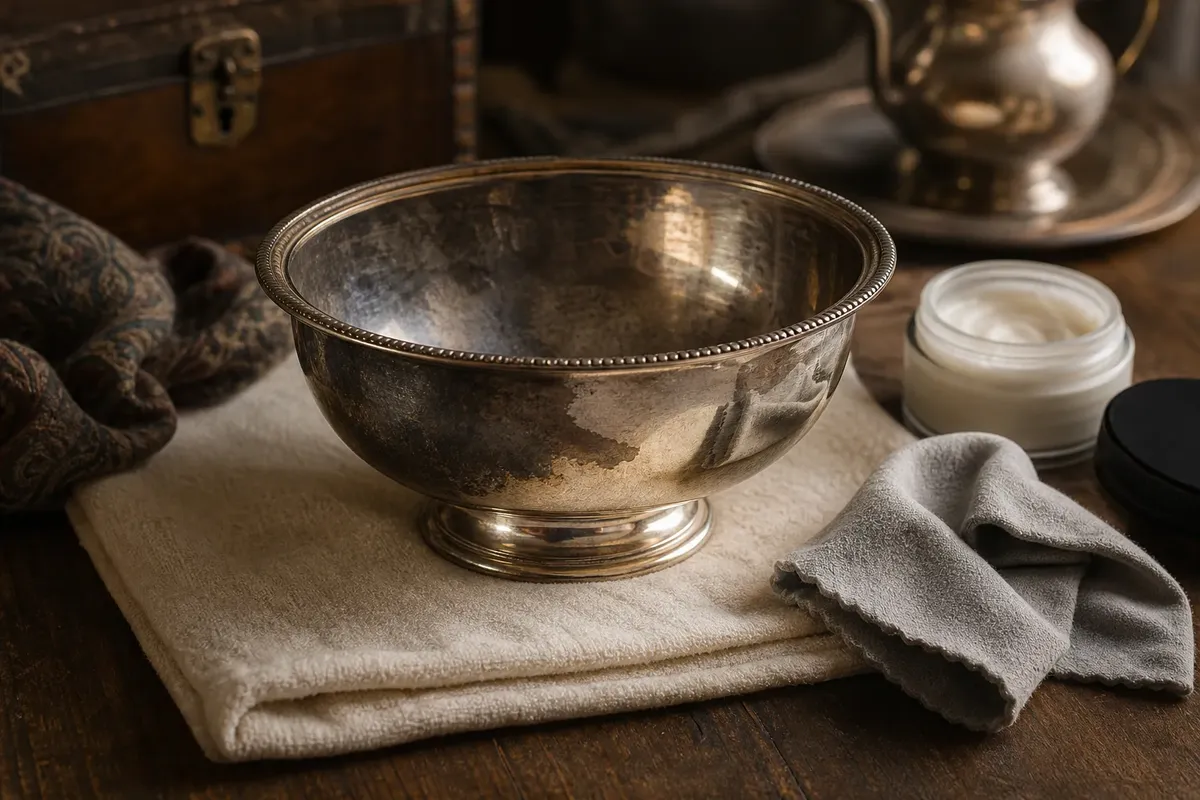
The most common mistake with tarnished silver is polishing before checking what changed. Abrasive cleaning can remove sound surface metal along with discoloration, while a close look may show that no treatment is needed. Why silver tarnishes without being damaged comes down to a surface reaction, not necessarily a failure of the object.
Imagine you inherit a small silver bowl from a drawer. Its outside looks gray-brown, the inside is darker near the base, and a few bright patches show where hands have touched it. In this invented situation, set the bowl on a clean, soft surface and inspect it in good light before rubbing it.
Inspect the Surface
Begin with the object’s condition, not its shine. Look for dents, cracks, loose joins, sharp edges, worn areas, and places where a coating or decorative detail may be lifting. Tarnish changes surface color; damage can alter the object’s shape, stability, or material.
Turn the bowl gently if it is safe to handle, and compare dark areas with protected spots such as the underside or a recessed detail. Note where the color appears and whether it follows the contours. Darkening in grooves may be tarnish, while a sharply bounded patch or flaking edge calls for more caution.
In the imagined case, the darkening follows the bowl’s contours. The rim is smooth, the shape is intact, and no coating appears to peel. These observations make tarnish plausible, but they do not prove that the bowl is solid silver.
Understand Silver Tarnish
Silver can react with sulfur-containing compounds in the air and form a dark surface layer, commonly silver sulfide. Moisture, storage conditions, and nearby materials can influence how quickly discoloration develops. The reaction affects the exposed surface, so an object can look dramatically changed while retaining its shape and function.
Tarnish is like a film on a window: it changes what you see without changing the pane beneath it. The comparison has limits because silver’s surface chemistry is different, but it helps distinguish appearance from structure. A darkened surface alone does not show that the object is broken or worn through.
Tarnish can look yellowish, brown, gray, or black. Color alone cannot identify an object’s metal or reveal how much silver it contains. Plated pieces, silver alloys, and objects with other surface treatments may need different care.
Separate Wear From Tarnish
Look for clues beyond color. Tarnish may follow exposed surfaces and gather in recesses. Structural damage can appear as a crack, split seam, distorted rim, or loose handle. Wear may show as thinning, loss of detail, or a different-colored base metal visible through plating.
These signs can overlap. A worn spot may be bright rather than dark, and an old repair can resemble a seam or a change in finish. If the distinction matters before cleaning an heirloom or selling an object, ask a qualified silversmith or appraiser to assess it. Do not try to diagnose uncertain metal or plating with a scratch or chemical test.
In the imagined case, the bright patches are smooth and appear on the rim and outer curve, where contact is likely. The owner records their locations and sees no contrasting metal or loose join. That supports a gentle approach, but it does not establish that every silver-colored object is solid silver.
Questions About Tarnish?
Does dark silver need polishing?
Not necessarily. If the object is stable and the change is only in appearance, leaving it alone may be reasonable, especially when its patina is part of its character.
Can tarnish weaken a silver object?
Ordinary surface tarnish does not, by itself, mean that an object has lost structural integrity. Cracks, failing joins, severe wear, and corrosion in another material are separate concerns that color alone cannot settle.
How can I tell if silver is plated?
Look for worn spots that reveal a different-colored layer, and check marks or purchase records if available. Visual clues and marks are not always conclusive, so consult a knowledgeable professional before using an abrasive treatment on an uncertain piece.
Is a dark patch always tarnish?
No. A patch may be a coating, residue, repair, or different material in an inlay or nearby component. Avoid scraping it; document what you see and seek an assessment if the patch is unusual or the object matters to you.
Choose a Careful Next Move
Decide whether you want to preserve the current appearance, remove light tarnish, or investigate a possible condition problem. Do not polish simply because the surface is dark. The right choice depends on the object’s construction, finish, and intended use.
- If the color is acceptable and the object is stable, leave it as it is; if not, inspect the surface before considering care.
- If you see cracks, loose parts, peeling, unusual patches, or exposed base metal, stop and ask a qualified professional; if none are present, continue assessing the object’s identity and finish.
- If marks or records identify the material and finish, use that information to choose a suitable care method; if they do not, seek a qualified assessment before using an abrasive product.
- If a silver-care product is labeled for the object’s specific surface and the object is sound, follow its directions with a soft cloth; if the finish is uncertain or delicate, do not apply it.
- If the surface changes unexpectedly, such as showing a new bright spot, color transfer, or loss of detail, stop; if it remains stable, continue only as directed by the product label.
- If the object has fragile ornament or a valued patina, avoid routine polishing and ask a conservator or qualified silversmith about care; if it is a plain, identified piece, use a method suited to its material.
Say the owner confirms that the bowl is an ordinary silver-plated serving piece with no fragile ornament and chooses a product labeled for that surface. The owner follows the label with a soft cloth, checks the bowl after each gentle pass, and stops when the visible tarnish has eased; if the cloth instead exposes a different-colored layer or removes detail, the owner stops and seeks professional advice. The expected result is a cleaner-looking surface, not a repair to the bowl’s structure.
Store Silver Carefully
After care, store silver in a clean, dry place away from materials that may release sulfur compounds, including some rubber products, wool, and certain papers. A pouch or container made for silver can help limit exposure. Avoid wrapping the object in materials whose composition is uncertain.
Handle a clean piece with dry hands and inspect it before putting it away. If tarnish returns, that does not mean the earlier care failed or the object is damaged; it means the surface has encountered conditions that allow the reaction to recur. A calm assessment is more useful than chasing a permanently bright finish.
Why silver tarnishes without being damaged is a practical distinction: color can change while the object remains sound. In the bowl’s imagined case, inspection came before cleaning, and the owner chose a response based on visible condition rather than alarm. Looking, identifying, and then choosing helps preserve both the metal and the details that make an object worth keeping.
Look at this next
Hammered or Smooth Silver: How Each Finish Shapes Light
Compare hammered and smooth silver finishes by the way they catch light, then use a simple…
The Fork’s Changing Place at the Table
The fork’s changing place at the table reflects shifting dining customs. Learn how to read silver…