The Polishing Cloth Myth: More Effort Is Not Always Better
Silver polishing cloth care starts with a clean, silver-safe cloth and light pressure. Learn how to use it, recognize residue, and know when to stop.
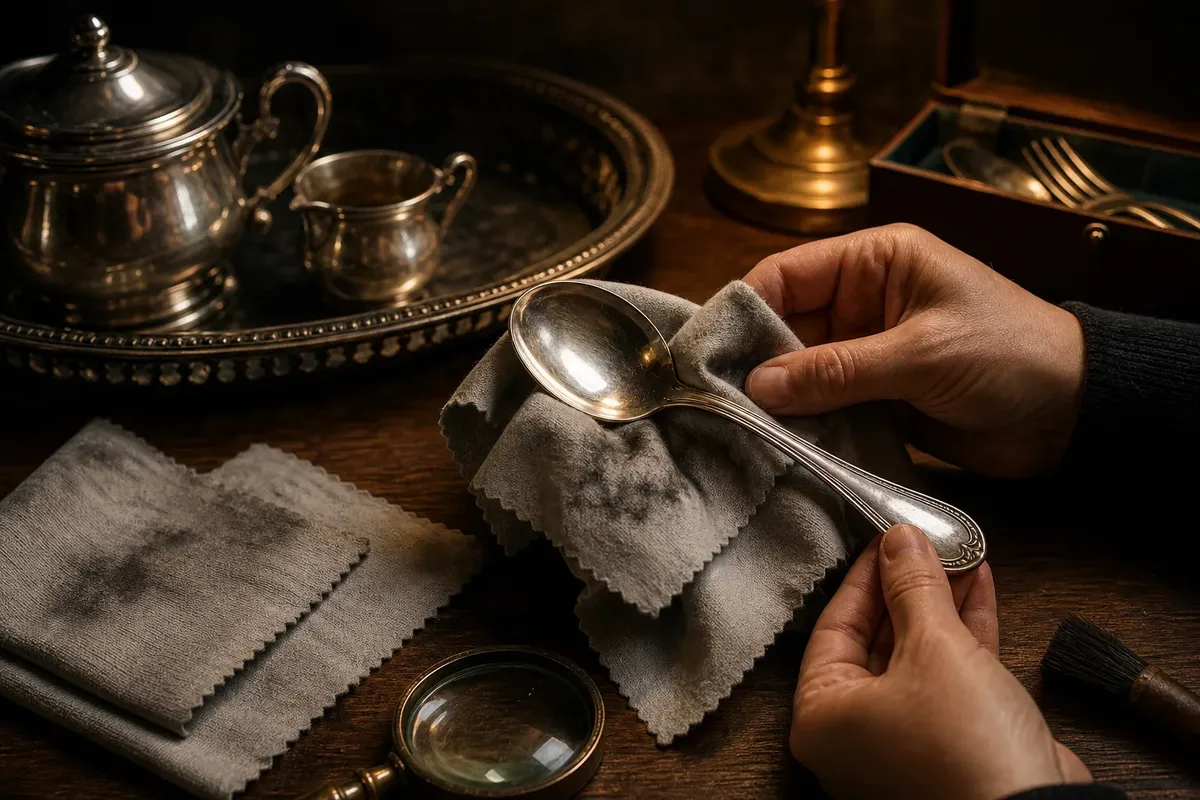
The most common mistake with a silver polishing cloth is using the same loaded patch for the whole job. Grit trapped in the fabric can scratch a surface, while polishing compound can smear onto it; switching to a clean section and stopping at the right time helps avoid both problems.
Silver polishing cloth care is less about chasing a uniform shine than controlling what touches the object. Keep the cloth clean, follow its product directions, and treat streaks or unexpected color changes as a cue to pause rather than rub harder.
Choose the right cloth
Use a cloth labeled for silver and check its care instructions before starting. Some are treated with polishing agents, so washing them may remove their intended treatment; others have different directions. Do not assume a household microfiber cloth will polish tarnish just because it feels soft.
Work on a clean, dry surface with good light. Keep the cloth away from dust, crumbs, and grit, and do not use a section that has touched another metal or a dirty surface. Like using a fresh side of a kitchen sponge, changing to clean fabric helps keep collected residue from being dragged back across the object.
Use controlled contact
Hold the cloth loosely and make short, light passes. Fold it to expose a clean area as the working section darkens or collects residue. Support a thin handle or delicate part with your other hand so the object does not flex or snag in the fabric.
Follow the shape of the piece where practical instead of scrubbing back and forth over one spot. Do not twist the cloth into a narrow point to scrape inside engraving, and do not press harder when a mark resists. A polishing cloth is for careful surface contact, not for digging into details.
When should you pause?
How do you know the cloth is dirty?
Look for visible grit, lint, or residue from another task, and check whether the working patch has become heavily loaded. Fold to a clean area or set the cloth aside; if no clean section remains, stop and follow the maker’s directions for replacement or care.
What if the cloth catches?
Stop at once if fabric snags on a rough edge or ornament. Do not pull it free by rubbing harder; inspect the area without forcing it, and consult a qualified silver conservator if a fragile detail or damaged finish may be involved.
What if the surface looks streaky?
Pause and inspect it in good light, since streaks can come from residue or uneven contact. Try only a clean, soft cloth for a gentle wipe if the object’s care directions allow it; if the patchiness remains or the surface changes color, do not add another product without specialist advice.
Can you use one cloth on every piece?
No. A cloth suitable for plain silver may not suit a coated, plated, deliberately darkened, or mixed-material object. Check the object’s care guidance and the cloth label; when either is uncertain, leave the cloth unused and ask a qualified professional.
Make the stopping decision
Decide what you need the cloth to accomplish before you begin. If the goal is to remove fingerprints or light residue, a clean soft cloth may be enough; if you are unsure whether the surface needs polishing, wait until you can identify the finish or get qualified advice.
- Check the label for silver-care directions; if it names the object’s finish, follow them, but if it excludes that finish or is unclear, do not use the cloth.
- Check for grit or lint on the working patch; if either is present, fold to a clean section, but if none remains, stop and set the cloth aside.
- Check whether the object flexes when held; if it does, support it before making a light pass, but if it still bends or feels unstable, stop and seek professional advice.
- Check whether a clean pass removes the surface residue; if it does, stop polishing, but if a mark remains, do not increase pressure and reassess the material and finish.
- Check for a snag at an edge or ornament; if the cloth catches, stop and inspect without pulling, but if the area appears damaged, consult a qualified conservator.
- Check for a new color change or persistent streak; if either appears, stop and avoid adding another cleaner, but if the object’s care instructions identify a safe next action, follow those directions.
A worked cloth routine
Say you have a plain silver serving spoon with fingerprints and a polishing cloth labeled for silver; these details are invented for the example. First, you read the cloth directions and confirm they do not rule out the spoon’s finish. Next, you inspect the spoon and cloth under a lamp, finding no stones, coating, visible wear, or grit. You fold the cloth to a clean patch, support the handle, and make a light pass over the fingerprints. The marks disappear, so you stop; if a streak had remained or the cloth had snagged, the next decision would have been to pause rather than press harder.
Keep cloths in good condition
Store a polishing cloth as its maker directs, away from dust and contact with household cleaners, metal filings, or other polishing products. Do not use it for unrelated tasks, since residue picked up elsewhere can transfer to silver the next time you handle it.
For a cloth that is visibly soiled, damaged, or out of clean working sections, check the label for whether it should be washed or replaced. If its instructions are missing, avoid improvising with detergent or solvents; use a fresh cloth intended for silver instead.
Good silver polishing cloth care means choosing a suitable cloth, presenting a clean section to the surface, and stopping when the object is clean enough for its purpose. Keep the cloth’s label and the object’s care notes together, so the next cleaning begins with a clear choice rather than guesswork.
Look at this next
Why Silver Tarnishes Without Being Damaged
Why silver tarnishes without being damaged: learn to assess a darkened surface, distinguish tarnish from wear,…
Hammered or Smooth Silver: How Each Finish Shapes Light
Compare hammered and smooth silver finishes by the way they catch light, then use a simple…