Silver at the Table: Objects That Mark a Shared Occasion
Silver at the table can make hospitality legible through serving pieces and their placement, helping guests see what is offered and how to take part.
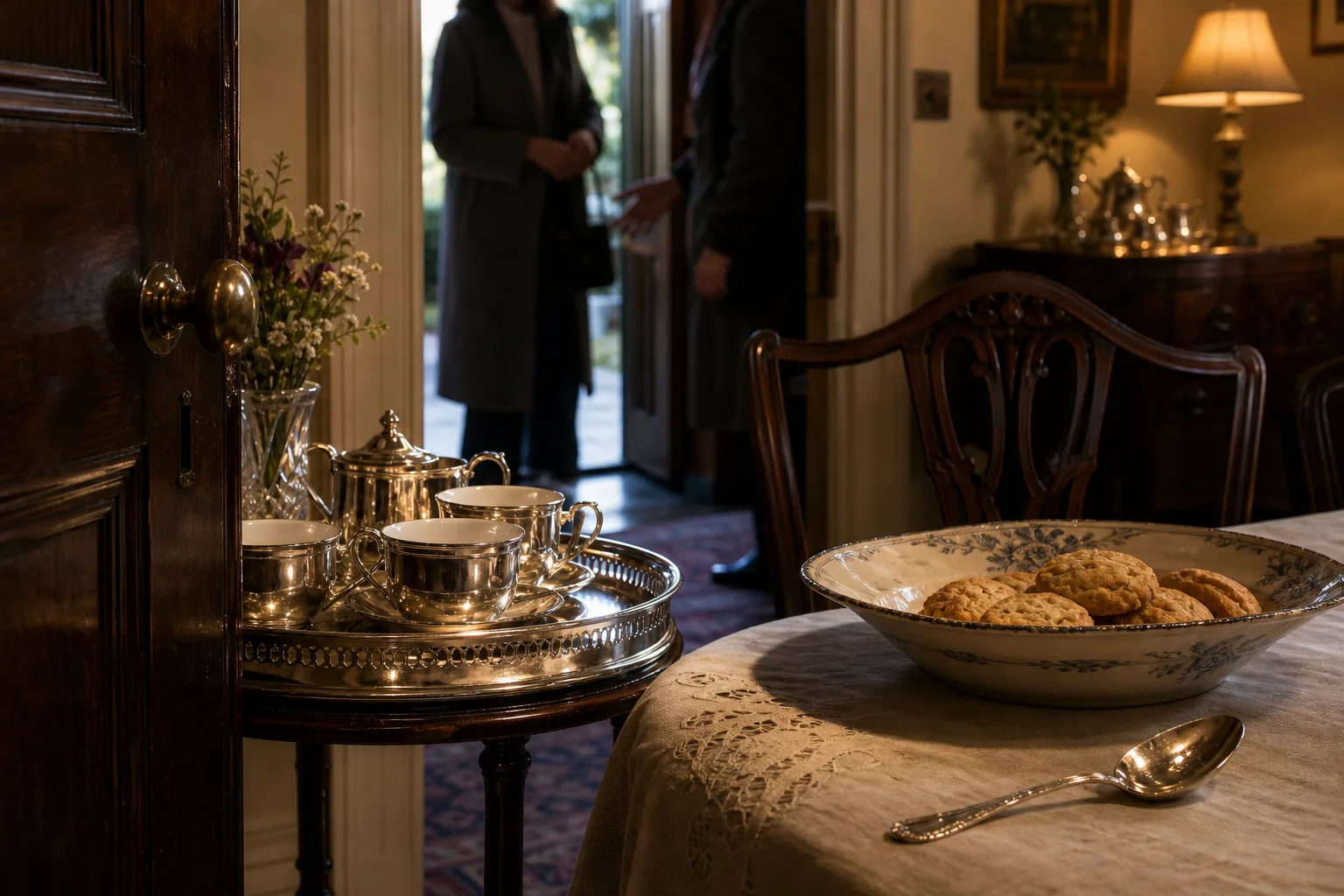
Silver at the table can make hospitality legible before a host says a word. A tray by the door, a spoon beside a serving dish or a bowl passed between guests gives an occasion a visible structure. The meaning lies not only in the metal, but in the arrangement and the relationships it helps express.
Welcome and ritual
A silver object can mark a moment of welcome without dictating what anyone must do. A tray offered at the door may accompany a greeting; a bowl brought to the table may become part of a family’s shared routine. In each case, the object helps frame an encounter, while the people present give it meaning.
The same vessel can carry different associations in different households. One family might bring out a particular bowl for a holiday meal; another might use a similar bowl every day. Its significance grows from repeated practice, not from a fixed symbolism built into the material.
Notice who brings an object forward and who is invited to respond.
Memory and labour
Table silver can make work visible as well as hospitality. Someone chooses the pieces, polishes them, lays the table and later clears it. A serving spoon may pass through several hands during a meal, linking preparation with the shared act of eating.
An inherited piece can also prompt family stories. Those memories belong to the people who tell them; the object alone cannot establish where it was used or what happened around it. When reading an older setting, distinguish visible details from claims that need supporting accounts or family records.
Customs in context
Rituals differ between families and communities. A toast, the presentation of a dish or the passing of a vessel may mark a transition in one setting and have no special meaning in another. If a shared vessel might be unfamiliar or unwelcome, offer an alternative and let guests choose.
Older table objects can hint at habits of service, but they do not reveal the feelings of everyone who used them. A tea strainer may suggest a particular kind of tea service; wear on a handle may point to frequent handling. Neither clue identifies a specific gathering. Consider an object’s companions, condition and any surviving account before making claims about its past.
A considered arrangement
Say you are arranging an invented afternoon tea in a family dining room. Your starting set-up is a small silver tray with cups near the doorway, a ceramic dish of biscuits on the table and a serving spoon beside it. You want the arrangement to welcome arrivals without making seated guests guess how to help themselves.
You first move the tray just inside the room, where it remains visible without narrowing the doorway. Then you place the biscuit dish within reach of the seats and turn the spoon’s handle towards the nearest guest. As people arrive, you observe whether they can see the cups and whether a seated guest can take a biscuit using the spoon. If either action is unclear, you reposition that item; if both are straightforward, you leave the arrangement in place. The result tells you whether the layout is legible, not whether everyone shares the same idea of hospitality.
Questions about table customs?
Does silver make a meal more formal?
It can give a meal a ceremonial feel, especially when a household brings out particular pieces for an occasion. The food, setting and behaviour of the people present also shape its tone.
Can an everyday object become part of a ritual?
Yes. A familiar bowl or spoon may become associated with a recurring family gathering through repeated use. That meaning comes from shared practice rather than the object’s material alone.
What if a custom is unfamiliar to a guest?
Offer a simple explanation and a clear alternative, without putting anyone on the spot. That gives guests room to take part in a way that feels comfortable.
What can an old table setting tell us?
It can show which objects were arranged together and suggest how a meal might have been served. Claims about a specific household or occasion need context beyond the objects themselves.
Reading shared meaning
To interpret a table setting, notice which objects are brought forward, who handles them and how others respond. Those details can reveal the shape of an exchange without turning it into a universal rule about hospitality.
For a gathering of your own, give guests clear choices and avoid assuming that a familiar family custom will be familiar to everyone. A thoughtful table lets people join the occasion without needing to know the history of every object.
Related reading

A Hallmark Is a Clue, Not a Complete Biography
Learn how to read a silver hallmark by recording each mark, comparing interpretations and deciding when…

Why a Spoon’s Bowl Changes Shape
Why a spoon’s bowl changes shape, and how outline, depth and handle proportions help you choose…