Before You Polish: A Conservative Silver Care Checklist
A silver care checklist helps you spot fragile areas, handle and store silver thoughtfully, and decide when to pause and ask a conservator for advice.
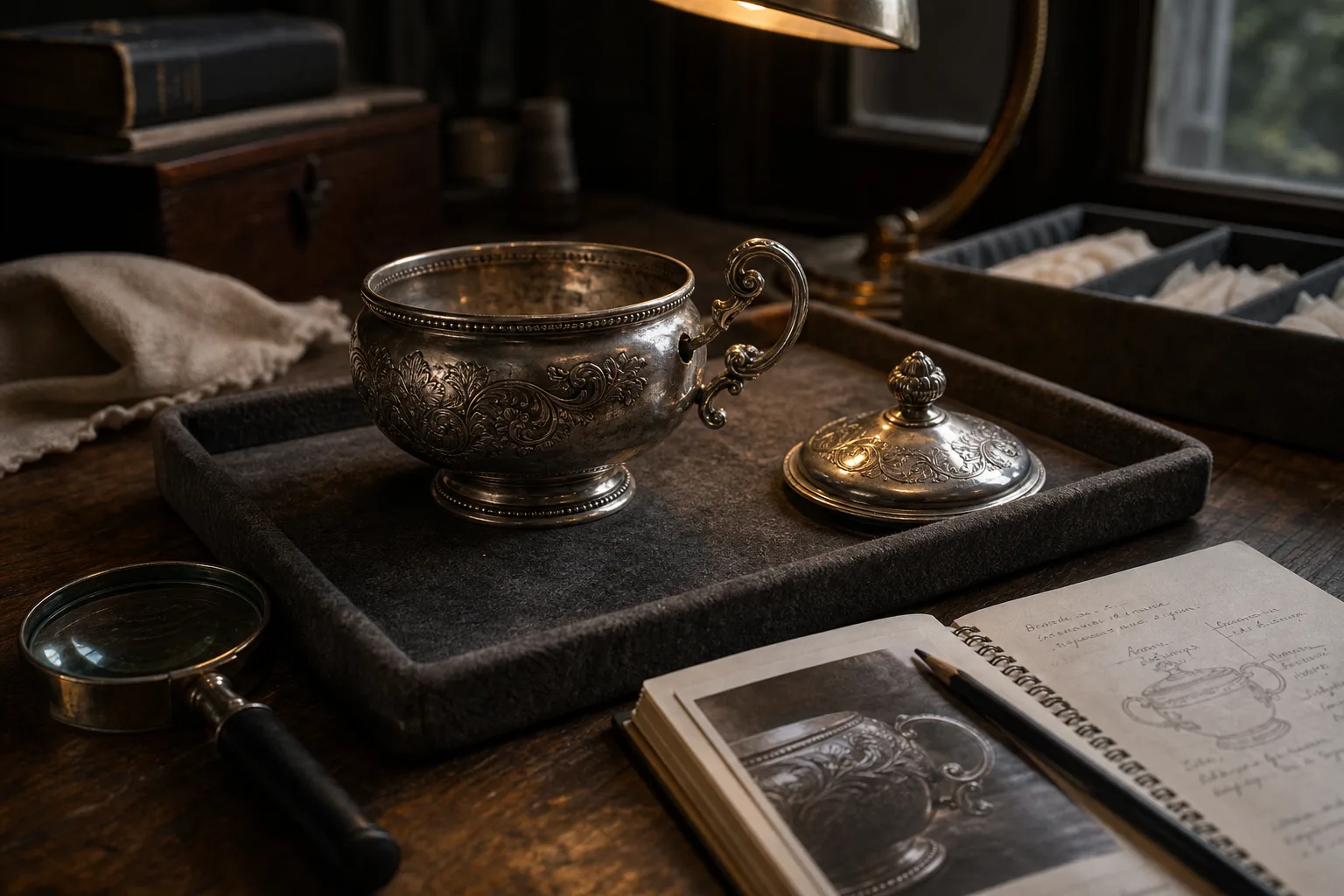
A silver care checklist should begin with the object’s condition, not its shine. Before cleaning silver, look for loose parts, fragile decoration, old repairs and signs of an intentional finish. If anything is uncertain, pause before touching the surface.
Inspect before cleaning
Tarnish is a change to silver’s surface, not simply dirt, and removing it is not always desirable. Dark areas may be part of the design, especially around engraving or raised decoration. Since a finish, deposit or surface change can be difficult to distinguish by sight alone, do not test a doubtful area by rubbing or scraping it.
In good light, inspect the object without touching questionable areas. Look near seams, handles, feet, rims and joins, where damage or old repairs may be visible. Let each observation guide the next decision:
- Loose components: Check whether a lid, hinge, handle or foot moves. If it does, keep the piece supported and do not lift or operate it by that part; if it stays secure, continue the visual inspection without applying force.
- Cracks or distortion: Look for splits, sharp dents or misshapen areas. If any are present, limit handling to placing the object safely and seek a conservator’s advice; if none are visible, do not assume the object is safe to clean.
- Surface changes: Look for flaking, blistering, unusual colour, powdery deposits or a coating that appears to be lifting. If you see any, leave the surface untouched and consult a conservator; if the surface looks even, avoid polishing if its finish is uncertain.
- Attached materials: Check for enamel, wood, leather, stones, lacquer or other non-metal parts. If present, avoid water, polish or a dip until you have advice suited to the object; if absent, consider its condition and construction before any care.
- Old repairs: Look for joins, replacement parts, adhesive or solder that appears unstable. If a repair seems loose, avoid cleaning around it and seek advice; if it appears stable, do not take that appearance alone as permission to wet or polish the object.
- Stored contents: Notice unusual staining, residue or odour that could relate to something previously held inside. If present, avoid emptying, brushing or washing the area and ask a conservator what to do; if absent, continue with a visual check.
Do not probe a suspicious area with a fingernail or tool. It could disturb a fragile surface or worsen a crack. Photograph concerns in place and record where they appear.
Support while handling
Use clean, dry hands and support the object at a stable part of its body. A rim, handle, spout or applied ornament may not bear the object’s weight. If you cannot identify a safe way to lift a piece, leave it where it is until you can arrange help or advice.
Set it on a stable, padded surface away from sinks, taps, hard stone and crowded worktops. Remove jewellery that could catch or scratch. Gloves are not automatically safer: cotton can snag on openwork, and nitrile gloves may reduce grip. Choose handling arrangements for the object and task; gloves are not a substitute for secure support. For a fragile, valuable or unfamiliar piece, ask a qualified conservator for handling advice.
Keep loose parts beside the main object in a padded tray. Do not tape them in place or force a stuck lid. Say you have a sugar bowl whose foot shifts and whose lid sits loosely. You place the bowl on a padded tray, set the lid beside it and avoid lifting the bowl; the observable result is that neither loose part bears weight while you seek advice.
Choose suitable storage
Choose a clean, dry location away from damp cupboards, radiators, direct sunlight and strong odours. Some nearby materials, including wool, rubber and certain paints, can contribute to tarnish. Keep household cleaners, cosmetics, perfume and food residues away from stored silver.
For an object whose condition and materials are understood, clean tissue or a purpose-made silver cloth may provide a simple barrier. Store pieces separately so they cannot rub together. Avoid newspaper, cling film and unidentified plastic, and put labels on the box rather than directly on the object.
Silver combined with wood, enamel, leather, adhesives or other materials may need a different storage arrangement. These materials can respond differently to their surroundings. If the object’s needs are unclear, ask a conservator about suitable materials and placement.
Keep the storage area clean, dry and free of strong-smelling household products.
Set cleaning limits
There is no reliable visual shortcut for deciding whether every silver object is safe to wash or polish. Age, construction, previous treatment and hidden joins can all affect what is suitable. If you are unsure about any of these, stop at inspection and seek advice from a qualified metals conservator before applying liquid or a cleaning product.
A soft brush may dislodge loose dust, but even brushing can snag fine work or disturb powdery material. Do not brush if fibres catch, deposits move or a component shifts. Avoid silver dips, abrasive powders, scouring pads and powered tools unless a conservator has advised a method for that particular object. Polishing can remove surface material, alter intentional darkening and affect adjacent finishes.
Imagine you have a small silver bowl with an unknown coating and a dark engraved pattern. You photograph the coating and pattern, leave the bowl unwashed and unpolished, and contact a metals conservator. The resulting decision is to defer treatment until the surface and construction have been assessed.
When should care wait?
Should I polish a dark patch?
Not if you cannot tell whether it is tarnish or an intentional finish. Leave it alone and ask a conservator to assess it before using polish or a dip.
Can I wash silver at home?
Whether washing is suitable depends on the object’s construction, materials and previous treatment. If those are uncertain, avoid washing until a conservator or another suitably qualified professional has assessed the situation.
What should I do about a loose handle?
Do not lift the object by the handle or try to tighten it. Keep the piece supported on a padded surface and seek advice from a metals conservator.
Who can advise on an important object?
A qualified conservator can advise on physical care and treatment. An appraiser may assess significance or value, but that role does not replace conservation advice about cleaning or repairs.
Keep a care record
After handling, return the object to a stable support and look for any visible change. Avoid wiping fingerprints unless a conservator has confirmed that the surface is suitable for it.
Keep a dated note of visible condition and care decisions. Photograph the object and areas of concern, and store the images with the record rather than attaching them to the object or its wrapping.
Before acting, use this silver care checklist:
- Support: Check whether the part you intend to hold is secure. If it is loose or uncertain, leave the object in place and seek advice; if it appears secure, support the body rather than a projecting part.
- Surface: Look for cracks, movement, unusual deposits or unstable repairs. If you find any, stop and contact a conservator; if none are visible, continue only with a visual assessment.
- Finish: Check whether darkening or a coating might be intentional. If you are unsure, do not polish; if a conservator has assessed it, follow their advice for that surface.
- Other materials: Look for wood, enamel, stones, leather or adhesives. If present, avoid liquids and cleaning products until advised; if absent, still consider hidden joins and previous treatment.
- Work surface: Check that the surface is stable, clear and padded. If it is not, prepare another surface before moving the object; if it is, keep tools and liquids away unless their use has been advised.
- Storage: Check whether the wrapping and neighbouring items are clean and suitable. If they are not, separate the object and ask about suitable materials; if they are, make sure the piece cannot rub or knock against another object.
- Record: Check whether visible changes have been noted and photographed. If not, document them before further handling; if they have, share the record when asking a conservator for guidance.
Silver care often means leaving the surface alone. A silver care checklist is most useful when it helps you recognise what you can safely observe and when a particular object needs qualified advice.
Related reading
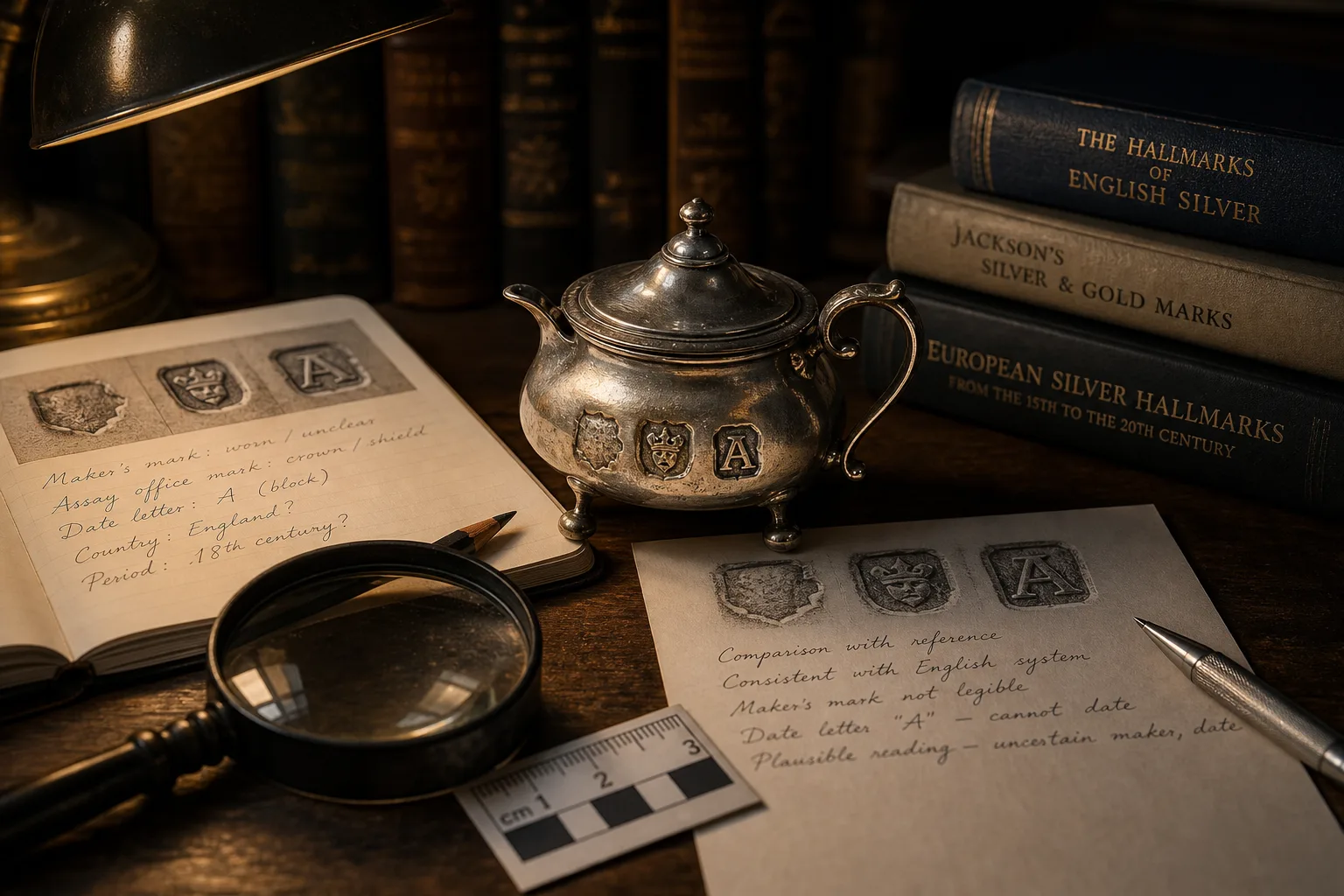
A Hallmark Is a Clue, Not a Complete Biography
Learn how to read a silver hallmark by recording each mark, comparing interpretations and deciding when…

Why a Spoon’s Bowl Changes Shape
Why a spoon’s bowl changes shape, and how outline, depth and handle proportions help you choose…